O. Reg. 306/04
The provincial regulation governing the reuse and land application of sewage sludge and other treatment residuals in Ontario.
Read the regulation →How ROHES manages biosolids land application, from regulation and nutrient management to sub-surface injection and odour control.
Biosolids are the nutrient-rich organic solids produced during wastewater treatment. Treated and managed properly, they are a safe and useful soil amendment — an alternative to synthetic fertiliser that returns organic matter to the land.
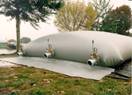
ROHES currently manages nine membrane-lined storage cells, which give our clients storage through winter and during inclement weather, when land application is not feasible. Under Ontario's Nutrient Management Act, wastewater treatment facilities are required to provide storage for all of the non-agricultural source material they generate across a 240-day period.
With consumer sensitivity, the odour and appearance of sludge on local farms has become a real issue — particularly on properties in close proximity to residential development.
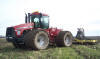
As surface application becomes less popular, demand for sub-surface injection continues to grow. This, along with farmer demand, led ROHES to purchase a second AerWay SSD injection unit.
Sub-surface injection significantly reduces odour, ensures a uniform application rate across the entire width of the implement, and aerates the soil — which can improve crop establishment.
Land application in Ontario is closely regulated. ROHES works to the current provincial requirements.
The provincial regulation governing the reuse and land application of sewage sludge and other treatment residuals in Ontario.
Read the regulation →Biosolid use is approved and overseen by the Ontario Ministry of the Environment and provides a safe alternative to other fertilisation methods.
Ministry information →Application rates are planned against the nutrient requirements of the receiving land rather than applied by convenience.
Agriculture and Agri-Food Canada →